
What Makes a Good Business Website in 2026?
Discover what makes a good business website in 2026, from clear navigation and mobile usability to useful content and customer-focused design.
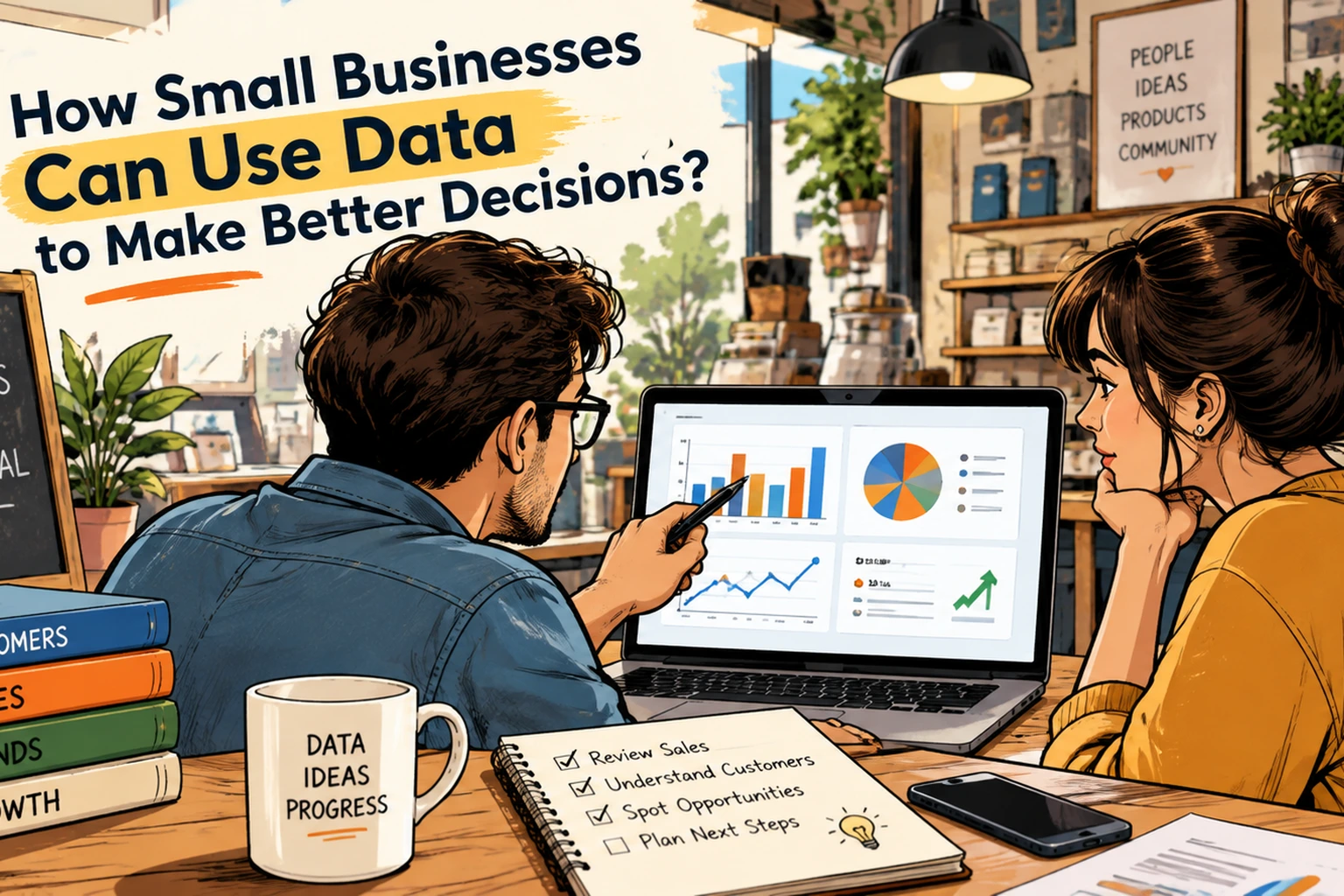
Every business generates data.
It comes from website visits, customer enquiries, sales, marketing campaigns, bookings and everyday conversations. Yet for many small businesses, this information is often spread across different tools and rarely used to its full potential.
Data can sometimes sound like something reserved for large companies with dedicated analysts and complicated reporting systems. In reality, small businesses can use simple information to better understand what is happening and make more informed decisions.
The goal is not to measure everything. It is to focus on the information that can genuinely help your business move forward.
Before looking at numbers, start with a question.
For example:
Having a clear question makes it easier to identify which information is actually useful.
Without one, businesses can quickly become overwhelmed by reports, dashboards and numbers that don’t lead to any meaningful action.
The most useful data is information that helps you understand something and decide what to do next.
One of the most valuable things a small business can understand is how customers first discover them.
Website analytics can provide insight into whether visitors are arriving through search engines, social media, email campaigns or other sources.
This information can help you understand where your marketing efforts are having the greatest impact.
For example, if a particular type of content consistently brings visitors to your website, that may be a sign to explore similar topics. If an advertising campaign generates plenty of traffic but very few enquiries, it may be worth reviewing the message or the page people are visiting.
Data doesn’t always provide an immediate answer, but it can point you towards the right questions.
A high number of website visitors doesn’t necessarily mean your business is achieving better results.
It is often more useful to look at what visitors do after they arrive.
Are they reading key service pages? Completing an enquiry form? Booking an appointment? Or leaving without taking any further action?
Looking at these behaviours can help businesses identify where the customer journey is working and where people may be experiencing difficulties.
The same principle applies to marketing. Rather than measuring success only by likes, impressions or clicks, consider whether activity is helping your business achieve its wider goals.
Individual numbers can be useful, but patterns over time can be even more valuable.
Looking at several weeks or months of information can help businesses identify recurring trends.
You may notice that enquiries increase during certain periods, particular services are more popular at different times of the year, or customers regularly ask the same questions before making a decision.
These patterns can help with planning.
For example, you may decide to prepare marketing activity around a seasonal increase in demand or create website content that answers questions your team receives repeatedly.
Small businesses often use different tools for different activities.
Customer enquiries may sit in one system, website analytics in another and marketing results somewhere else. This can make it difficult to see the bigger picture.
Where possible, connecting information can make decision-making easier. When you can see how marketing activity, website visits and customer enquiries relate to one another, it becomes easier to understand what may be contributing to business results.
This doesn’t mean every business needs a complex reporting system. Sometimes, bringing together a few important measures is enough.
Data is most useful when it leads to action.
If you discover that customers regularly leave a particular webpage, consider what might be causing the problem. If one marketing channel generates better-quality enquiries, think about whether it deserves more attention.
The aim is not to collect numbers simply because they are available.
Small businesses can benefit most when data becomes part of a regular process of asking questions, reviewing what is happening and making practical improvements.
Data will never replace experience, creativity or professional judgement.
But it can provide useful evidence alongside them.
By focusing on a few meaningful measures, small businesses can better understand their customers, identify opportunities and make decisions with greater confidence.
If you’re looking to make better use of your business data, Strivre Services can help you explore practical digital solutions that make information easier to manage, understand and use.
Discover what makes a good business website in 2026, from clear navigation and mobile usability to useful content and customer-focused design.

Discover how a business website can do more than share information by generating leads, supporting customers and contributing to business growth.
Tell us about your business and what you’d like to improve, so we can make your Growth more relevant to you.
By submitting this form, you agree to receive communications from Strivre Services about our services and relevant updates. Your information will be kept private and handled in accordance with our Privacy Policy.